
From Gregory to the Second Council of Nicaea
Arab armies take the Christian lands of the East, the English church settles its date for Easter, the councils argue over the person of Christ, and a council at Nicaea restores the veneration of images.
The English church and the East, about 700
Whitby, Lindisfarne and Canterbury in the north and west, with the eastern cities of the councils. No borders are drawn.
Images from the period
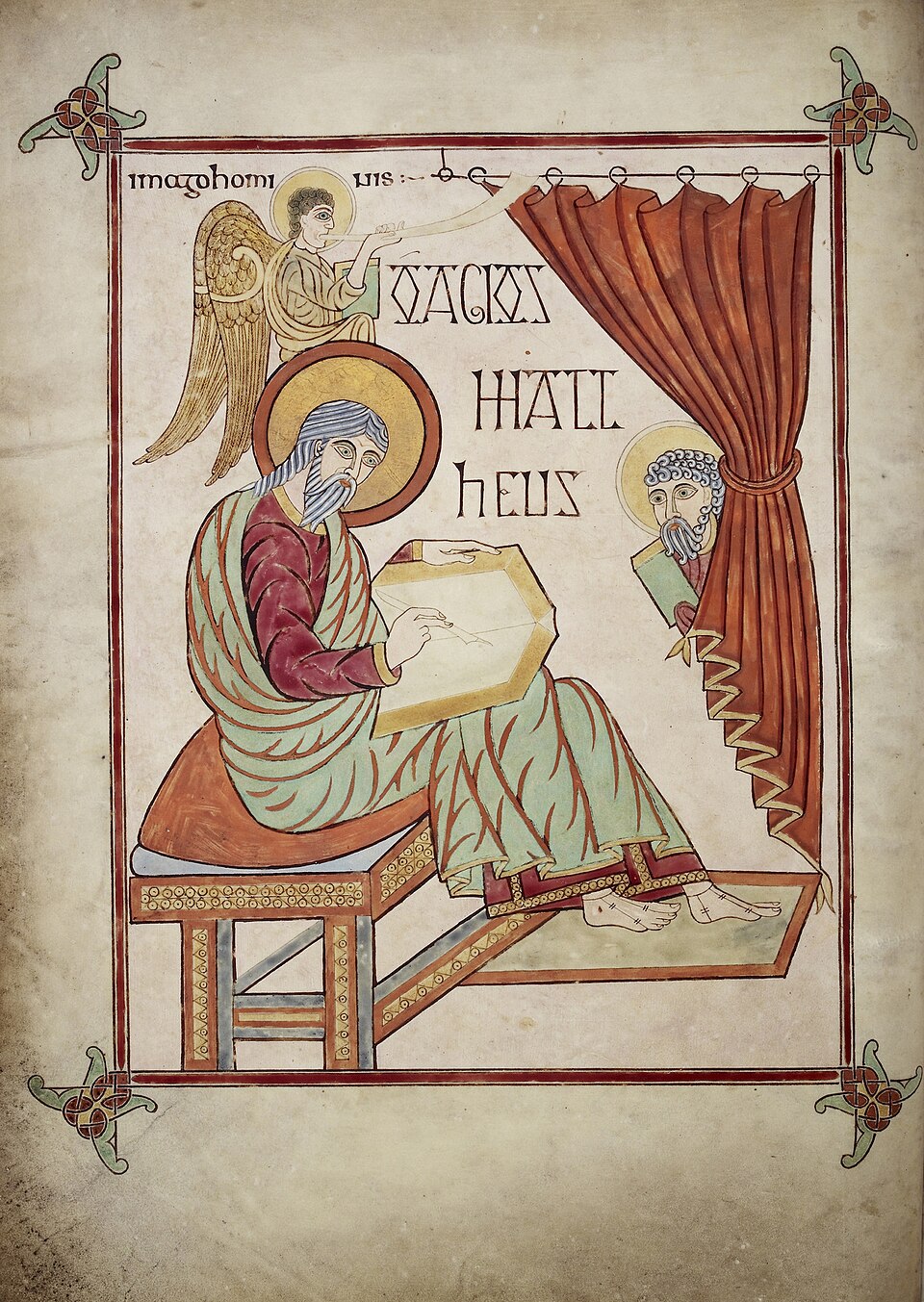
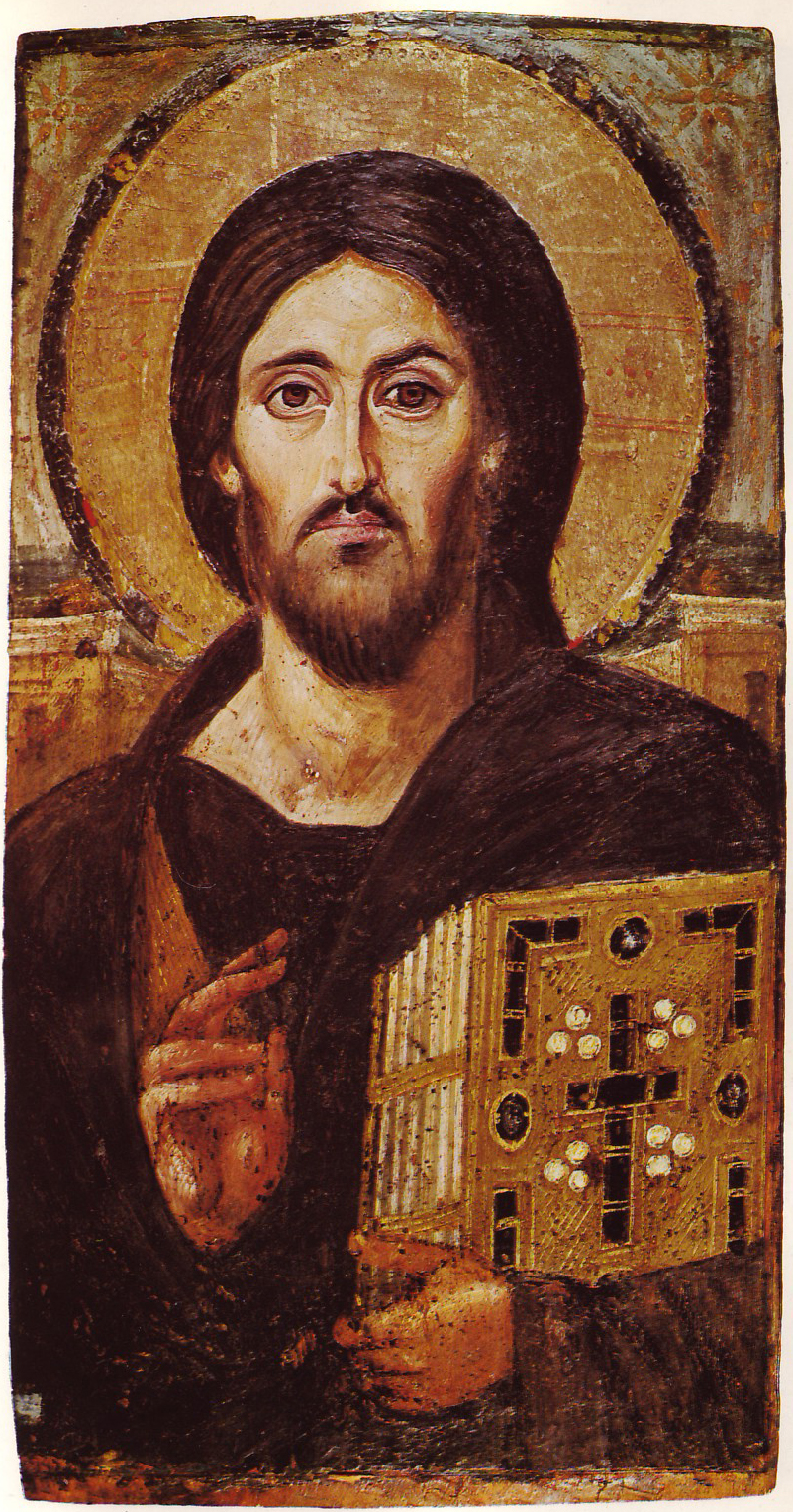
Overview
The fourth era ended with Gregory the Great and the first English converts. This era runs from Gregory’s successors to the Second Council of Nicaea in 787, which restored the veneration of images. In those years Arab armies took Syria, Jerusalem and Egypt from the Byzantine empire, the eastern church argued for decades over images, and the English church held its first councils.
The page is arranged by East and West, as before. Events are tagged East or West. The East in this era is the Byzantine empire, its councils and its emperors. The West is the English kingdoms, the Franks and the papacy in Rome.
When were the sources written?
| Writing | Usual date | Notes |
|---|---|---|
| Bede, Ecclesiastical History | Completed 731 | The translator’s date; one later insertion refers to 732 |
| Acts of the Sixth Council | 680 to 681 | NPNF2 vol. 14 |
| Acts of the Seventh Council | 787 | NPNF2 vol. 14 |
| Gibbon, Decline and Fall | 1776 to 1789 | A modern history, used here only for events and dates, with later editors’ notes |
Key beliefs and debates
Did Christ have one will or two?
The Sixth Council said Christ had two wills, human and divine, and condemned the view that he had one. The council also condemned Pope Honorius, who had died some years earlier, for supporting the one-will view. Whether Honorius’s letters really taught the condemned view has long been argued over; the councils volume prints the council’s sentence together with its editor’s historical note on the question. This page reports the council’s verdict and does not decide the question.
Should Christians venerate images?
The Seventh Council said yes: images of Christ, of the Mother of God, of the apostles and of the saints may be venerated, though not worshipped as God. The emperors who had banned images before it argued that such veneration was idolatry. The council’s own acts record both the confessions of the bishops who accepted the decree and the anathemas against those who did not. The councils volume’s editor notes that the Frankish kingdom did not at first accept the council, and that Gibbon, who mocked its acts, had probably never read them.
How should the English keep Easter?
Bede’s account of Whitby shows the question was about more than a calendar. The two sides argued over the authority of Peter and the custom of the Scots. Oswy decided for Rome, and Bede says Colman then went back into Scotland with those who would not accept the Roman Easter and tonsure. Bede also says Abbess Hilda had been on Colman’s side.
What did the Arab conquests mean for the church?
The sources on this page show some of what changed: Jerusalem surrendered on terms its patriarch negotiated, and the councils volume’s editor says that at the council of 787 the patriarchs of the conquered lands could not attend in person because of Muslim rule. How far the conquests changed Christian thought is a larger question that this page does not try to answer.
Worship and community life
Monks and the English church
Bede wrote about monasteries in Northumbria, and his account names the abbesses and monks there. The Synod of Whitby was held at the monastery of Abbess Hilda (Bede 3.25).
Bishops and councils in the East
The Seventh Council shows bishops confessing the faith in turn, and anathematizing those who disagreed. It was called by the emperors Constantine VI and Irene, and the council of 754 that it overturned had been called by an emperor too.
Islam: outside the sources used here
This page does not quote Muslim sources. Its account of the beginnings of Islam and of the conquests comes from Gibbon, who drew on Arabic historians, and it is limited to events and dates.
Glossary
| Term | Meaning on this page |
|---|---|
| Anathema | A formal curse by a council, cutting someone off from the church |
| Iconoclasm | The attack on the veneration of images |
| Monothelitism | The view that Christ had only one will, condemned by the Sixth Council |
| Synod | A church council, especially a local one (such as Whitby) |
| Tonsure | The shaving of the head that marked a monk or cleric; the English and the Scots differed on its form |
| Veneration | Honor given to images or saints, distinguished from the worship given to God |
Further reading
Modern scholarship is cited here, not copied. Titles and years were checked against the Open Library catalogue in November 2026. Nothing on the page rests on these books.
- Peter Brown, The Rise of Western Christendom (2nd edition, 2003). The framework for the period.
- Judith Herrin, Byzantium: The Surprising Life of a Medieval Empire (2007). Iconoclasm and the eastern church.
- Richard Fletcher, The Conversion of Europe (1997). The English mission and after.
- Averil Cameron, The Mediterranean World in Late Antiquity (1993). The East before the conquests.
Key events
West: Augustine lands in Kent
Gregory the Great's monks, led by Augustine, land on the Isle of Thanet and are received by King Æthelberht of Kent. Bede tells how the mission nearly turned back before it began, and how Gregory encouraged them to go on. The date is Bede's.
East: Islam begins in Arabia
Gibbon says Muhammad proclaimed himself a prophet in the fortieth year of his age, and that his flight from Mecca to Medina, the Hegira, began the Muslim era; his notes date it to 16 July 622. A note by a later editor dates Muhammad's death to 8 June 632, from the Eastern authors. This page does not use Muslim sources directly.
East: Arab armies take Syria, Jerusalem and Egypt
Gibbon tells how, after Muhammad's death, Arab armies took Syria from the Byzantine empire. Jerusalem held out for four months, until the patriarch Sophronius asked for terms on condition that the caliph Omar come in person to ratify them, and Omar came. Gibbon's note, following the Arabic historians Eutychius and Elmacin, dates the taking of Alexandria to 22 December 640.
East and West: Pope Martin, Maximus and the Lateran council
A council at the Lateran in Rome in 649, under Pope Martin I, condemned the one-will view, the translator of Bede notes, and Martin, pope from 649 to 655, died exiled in the Crimea. Gibbon says Martin's adviser, the abbot Maximus, was punished by the cutting off of his tongue and right hand. The English council of Hatfield later accepted the Lateran synod.
West: The Synod of Whitby
A council of the Northumbrian kingdom, held at Whitby with King Oswy presiding, debated the date of Easter and the monastic tonsure. Colman argued for the Easter he had received from his elders, and Wilfrid for the practice of Rome. Oswy decided for Rome, reasoning that Peter held the keys of the kingdom of heaven. Bede says Colman then returned home to Scotland.
East: The Sixth Ecumenical Council condemns Monothelitism and Pope Honorius
The council in Constantinople condemned the view that Christ had one will, not two, and condemned Pope Honorius, who had died some years before, as a heretic for supporting it. The council met from November 680 to September 681, with fewer than three hundred bishops, and its acts show the condemnation was read in session 13.
West: The Council of Hatfield
Bede says Archbishop Theodore, hearing that the faith at Constantinople was troubled, called the English bishops to Hatfield and found them all of one mind. Their statement accepts the five general councils and the Roman synod under Pope Martin against the one-will view, and confesses the Holy Ghost proceeding from the Father and the Son.
East: The attack on images begins
Gibbon says the emperor Leo III, after ten years on the throne, first had images moved out of the people's reach and then forbade them, and that his son Constantine called a council to condemn them; the councils volume dates that council to 754. A note by J. B. Bury, printed in the councils volume, says Leo pulled down the image of Christ above the Chalke gate of the palace. Gibbon gives no year for Leo's first measures, and the dates of the papal letters about them are disputed.
West: Bede finishes the Ecclesiastical History
Bede completed his history of the English church in 731, the translator says, and one of its last chapters sets out the state of the English church in that year.
West: The battle near Tours
Gibbon tells how Charles Martel's Frankish army met the Saracens between Tours and Poitiers, and doubts the larger claims made for the slaughter. Bede's history records that Gaul was laid waste by the Saracens, who soon received the due reward of their unbelief; the translator thinks this refers to the battle of 732 and was added after 731.
East: The Second Council of Nicaea restores images
The Seventh Ecumenical Council met at Nicaea and restored the veneration of images. Its acts include bishops' confessions that they venerate the images of Christ, the Mother of God, the apostles and the saints, and anathemas against those who do not. The council's own view separated veneration from worship. The councils volume's editor says three hundred and fifty bishops adopted its decrees unanimously, and that they were received in the East and by the pope, though not at first by the Frankish kingdom.
Key people
Colman and Wilfrid
Colman, bishop in Northumbria, said the Easter he kept he had received from his elders, who sent him there as bishop. Wilfrid, who had studied in Rome and spent a long time at Lyons, argued for the Roman practice. Bede reports the debate in detail, and says Abbess Hilda and her followers were on Colman's side; the king decided for Wilfrid's.
Honorius
The Sixth Ecumenical Council, meeting in Constantinople in 680 and 681, condemned him after his death. He had written in a way the council judged to support the one-will view of Christ, which it condemned as heresy. How far his letters really taught that view has long been argued over, and the councils volume prints the council's sentence alongside the editor's historical note on it.
Theodore of Tarsus
Ordained archbishop in Rome and sent to Britain with the abbot Hadrian. Bede says he came to his church in the second year after his consecration, on Sunday 27 May (669, in the translator's heading), held it for twenty-one years, and visited the whole island. He presided at the synod of Hatfield in 680.
Bede
Wrote the Ecclesiastical History of the English people, finished in 731, the translator says. His account of the mission of Augustine, the Synod of Whitby and the English church is the main source used on this page for England. He wrote more than a century after the earliest events he describes.
Maximus the Confessor
An abbot who defended the belief that Christ had two wills, human and divine, against the one-will view. Gibbon calls him the oracle of Pope Martin, and says that after Martin's Lateran synod condemned the emperor's decree, Martin died in exile and Maximus was punished by the cutting off of his tongue and his right hand.
Leo III and Irene
Gibbon says Leo III, after ten years on the throne, first had images raised out of reach and then forbade them, and that his son Constantine called a council against them; the councils volume dates that council to 754. The Second Council of Nicaea, held in 787 under Constantine VI and Irene, restored the veneration of images.
Sources for this era
- Ecclesiastical History of England, Bede, translated by A. M. Sellar (Project Gutenberg, ebook 38326)
- The Sixth and Seventh Ecumenical Councils, The Seven Ecumenical Councils, Nicene and Post-Nicene Fathers, second series, volume 14 (CCEL)
- The History of the Decline and Fall of the Roman Empire, volumes 4 and 5, Edward Gibbon (1776 to 1789), with later editors' notes (Project Gutenberg 734, 735)
- St. Matthew, Lindisfarne Gospels, f.25v; Icon of Christ Pantocrator, Sinai, Wikimedia Commons file records (British Library image, CC0; Saint Catherine's Monastery, public domain)
- Modern studies of the period, Peter Brown; Judith Herrin; Richard Fletcher; Averil Cameron
