
From Charlemagne to the Great Schism
The Franks reject the Council of Nicaea's decree on images, a Frankish king is made emperor in Rome, the Carolingian empire is divided, the East restores its icons, Rome and Constantinople quarrel over Photius and the creed, monks reform the church from Cluny, and in 1054 papal legates excommunicate the patriarch of Constantinople.
The Carolingian world and the schism
Aachen, Verdun, Tours and Cluny in the Frankish lands, Rome, Constantinople and Kiev. No borders are drawn.
Images from the period
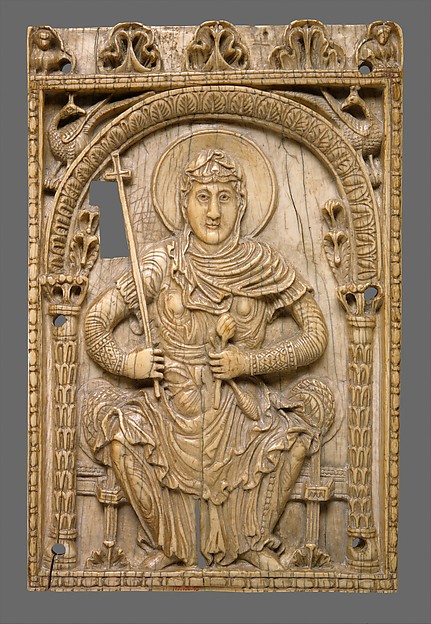
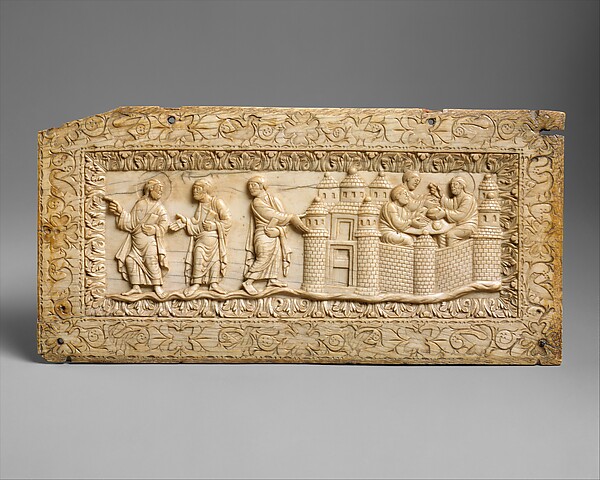
Overview
The fifth era ended at the Second Council of Nicaea in 787. This era begins with the Frankish answer to that council and ends with the excommunication of the patriarch of Constantinople by papal legates in 1054. In between, a Frankish king was crowned emperor in Rome, his empire was divided among his grandsons, the eastern church restored its icons, Rome and Constantinople quarrelled over Photius and the creed, and a monastery was founded at Cluny under the protection of the pope and subject to no earthly power.
The years from 787 to 800 open the era. The Frankish church had taken no part in the council of 787 and read its acts in a faulty Latin translation. The Caroline Books, written in Charlemagne’s name about 790 to 792, rejected both the council of 787 and the iconoclast council of 754, and the council of Frankfurt repudiated the council of 787 in 794. Charlemagne’s coronation in Rome in 800 followed.
The page is arranged by East and West, as before. Events are tagged East, West or Both. Most of the sources read for it are Western, and the Eastern side’s own writings were not read.
When were the sources written?
| Writing | Usual date | Notes |
|---|---|---|
| The Caroline Books | About 790 to 792 | Dated by the Catholic Encyclopedia; the councils volume’s editor says they appeared in 790. Not read directly |
| Liber Pontificalis, life of Leo III | On the events of 800 | Read in Thatcher and McNeal’s translation |
| Einhard, Life of Charles | Possibly about 820 | Grant says the date cannot be fixed with certainty |
| The Monk of St Gall, Life of Charles | 883 or later | Grant calls it credulous and jumbled; not used for facts here |
| Annales Laurissenses; Annals of St Bertin; Regino and his continuator; Annales Romani | Entries for 812, 843, 962 to 963 and 1046 | Read in Thatcher and McNeal’s translation |
| Foundation charter of Cluny | 910 | Read in Ogg’s translation |
| Gibbon, Decline and Fall | 1776 to 1789 | A modern history, used here only for events and dates |
| The Catholic Encyclopedia | The 1913 edition, on Wikisource | A Catholic reference work, used here only for events and dates |
Key debates
What did the coronation of 800 mean?
The Book of the Popes describes the pope crowning Charles and the Romans hailing him. Einhard says Charles would not have entered the church that day had he known the pope’s plan. Grant, the editor of Einhard, argues in a note that the regret was more probably about the manner, a title that seemed to come as a gift from the papacy, than about the title itself. The source book of Thatcher and McNeal says Charles had wanted the title and sought recognition from Constantinople, which came in 812. The sources read here do not settle whether the coronation was the pope’s idea or Charles’s.
Who should choose the pope?
In the sources read here, the choice was often made by others than the clergy of Rome. Thatcher and McNeal say the papacy had fallen under the control of Roman factions before 1046. After a synod held by Otto I in 963, the Romans elected Leo VIII in place of John XII, and at Sutri in 1046 Henry III had three rival claimants removed and a German bishop chosen. The Annales Romani add that the Romans then granted Henry the right to choose popes. Leo IX, chosen with Henry’s backing in 1049, began a reform of the clergy.
Should the Filioque be in the creed?
Western churches added to the creed that the Holy Spirit proceeds from the Father “and the Son”, in Latin Filioque. The Catholic Encyclopedia says no one knows who first added it, but that the creed with the addition was first sung in Spain after the Goths’ conversion, professed at Toledo in 589. A synod at Friuli adopted it in 796, and the council of Aachen of 809 appears to have approved it; Pope Leo III approved the doctrine but advised leaving the phrase out of the creed. The practice continued, and the encyclopedia says it was established in Rome itself by the middle of the eleventh century. Photius opposed the addition and listed it among his charges against the Latins in 867. The page reports the dispute but does not give the Eastern and Western arguments in full.
Worship and community life
Monks and reform
Cluny’s charter set its monks under the Rule of St Benedict, let them elect their own abbot, and placed them under the protection of the pope. It also bound them to works of mercy for the poor, strangers and pilgrims. Ogg’s introduction says Cluny kept the houses its monks founded under its own abbot, building a congregation of many monasteries.
Schools, books and worship
Charlemagne’s letter of 787 to the abbot of Fulda urged monks to study letters so they could understand the Scriptures. Einhard says Charles reformed the manner of reading and singing in church. The Catholic Encyclopedia credits Alcuin with a revised text of the Latin Vulgate and with the Mass-book that the Frankish church adopted. In the East, Cyril and Methodius gave the Slavs an alphabet and a liturgy in their own language.
Glossary
| Term | Meaning on this page |
|---|---|
| Filioque | Latin for ‘and the Son’, the phrase added to the Western creed about the Holy Spirit |
| Iconoclasm | The attack on the veneration of images |
| Legate | A representative sent by the pope |
| Simony | The buying and selling of church offices |
| Synod | A church council, especially a local one |
Further reading
Modern scholarship is cited here, not copied. Titles and years were checked against the Open Library catalogue in November 2026. Nothing on the page rests on these books.
- Rosamond McKitterick, Charlemagne: The Formation of a European Identity (2008). The Carolingians.
- Timothy Reuter, Germany in the Early Middle Ages, c. 800 to 1056 (1991). The Ottonians.
- Judith Herrin, Byzantium: The Surprising Life of a Medieval Empire (2007). The East.
Key events
West: The council of Frankfurt rejects the Second Council of Nicaea
Charlemagne's court had taken no part in the council of 787 and knew its acts through a faulty Latin translation. The Caroline Books, written in the king's name about 790 to 792, judged both the iconoclast council of 754 and the council of 787 to be wrong. The council of Frankfurt in 794 repudiated the council of 787 in its second canon.
West: Charlemagne crowned emperor
On Christmas Day in St Peter's, the pope crowned Charles, and the Romans hailed him three times as emperor, the Book of the Popes says. Einhard, writing a generation later, says Charles so disliked the title that he would not have entered the church that day had he known the pope's plan, and that he bore very quietly the indignation of the emperors at Constantinople. In 812 envoys of the emperor Michael I called him emperor at Aachen, the Frankish annals say.
East: Icons restored
After the death of the iconoclast emperor Theophilus, his widow Theodora restored the images. The Catholic Encyclopedia dates the restoration to the first Sunday of Lent, 19 February 842, and says a synod at Constantinople ordered a feast for it each year. Gibbon too says the festival of orthodoxy keeps its memory, and in 1913 the encyclopedia called the Feast of Orthodoxy one of the great feasts of the year in the Byzantine churches.
West: The Treaty of Verdun
The three sons of Louis the Pious, Charlemagne's grandsons, met at Verdun and divided the empire. Louis took the lands east of the Rhine, Charles the West, and Lothar, with the title of emperor, the land between, with Italy and Rome. The editors of the source book call it the beginning of the states of Germany and France.
East and West: Photius and Pope Nicholas I
The emperor deposed Patriarch Ignatius and Photius took his place. Nicholas I decided for Ignatius, and a Roman synod of 863 repeated that decision. In 867 Photius excommunicated the pope, then fell when a new emperor, Basil I, restored Ignatius. Gibbon says the quarrel was sharpened by a contest over which church the newly converted Bulgarians belonged to. These accounts are Western; Photius's own letters were not read for this page.
East: Cyril and Methodius go to Moravia
The two brothers from Thessalonica went to Moravia with an alphabet Cyril had invented and Slavonic translations of the Gospels and liturgical books.
West: Cluny is founded
William, duke of Aquitaine, gave his estate at Cluny to the apostles Peter and Paul for a monastery under the Rule of St Benedict. The charter, dated by Ogg to 11 September 910, let the monks elect their own abbot after Berno, placed them under the protection of the Roman pontiff, and forbade any prince, count, bishop or even the pope to take their property.
West: Otto I is crowned emperor
King Otto spent Christmas at Pavia and went on to Rome, where Pope John XII made him emperor with the acclamation of the Roman people and clergy. The next year, after John had sided with Otto's enemies, the Romans elected Leo VIII in his place.
East: Vladimir of Kiev is baptized
Vladimir, grandson of Olga, was baptized at Kherson and married Anna, sister of the emperor Basil II, the Catholic Encyclopedia says, dating it to 988; it reports a Russian historian's suggestion that he may have been baptized earlier at Kiev. Gibbon too tells of his conversion and his marriage to Anna.
Both: The Church of the Holy Sepulchre is destroyed
Gibbon says the Fatimid caliph Hakem had the church of the Resurrection in Jerusalem demolished, and that it was later rebuilt with the help of the emperor at Constantinople; his note gives 1009. The Catholic Encyclopedia gives 1010, and says smaller churches were built on the site in 1048.
West: The Synod of Sutri
Three men claimed to be pope: Benedict IX, Sylvester III and Gregory VI. The German king Henry III came to Italy and had a synod meet at Sutri on 20 December 1046. The Catholic Encyclopedia says Gregory gave up his office there; the Annales Romani say Henry had all three condemned. On Christmas Eve a new pope, Clement II, was chosen, and on Christmas Day he crowned Henry emperor.
Both: The excommunication of 1054
On 16 July 1054 the legates Pope Leo IX had sent, Cardinal Humbert among them, laid a bull excommunicating Patriarch Michael Cerularius on the altar of Hagia Sophia. Leo had died that April. Gibbon dated 'the consummation of the schism' from this act, but also notes that friendly letters were sometimes exchanged afterwards. The sources read for this entry are Western; the patriarch's own account was not read.
Key people
Charlemagne
Ruled the Franks for forty-seven years, Einhard says. In Rome on Christmas Day 800 Pope Leo III crowned him emperor. Einhard says he so disliked the title at first that he would not have entered the church that day had he foreseen the pope's plan. Einhard also says he reformed the manner of reading and singing in church, and in a letter of 787 he urged monasteries and bishoprics to teach and study letters.
Alcuin of York
Einhard calls Alcuin, a deacon from Britain, the most learned man of his time and Charles's teacher in everything but grammar. The Catholic Encyclopedia says he became master of the palace school, kept mostly at Aachen, from 781 or 782, revised the text of the Latin Vulgate, and compiled the Mass-book prescribed for the Frankish church.
Photius
A layman and imperial official made patriarch when Ignatius was deposed. Pope Nicholas I decided for Ignatius. In 867 Photius excommunicated the pope and listed the Latin addition of the Filioque among his charges; he was deposed the same year, restored after Ignatius's death in 877, and deposed again in 886. The Catholic Encyclopedia gives 857 for his appointment in one article and 858 in another.
Cyril and Methodius
The Moravians asked for a teacher who could hold services in the Slavonic tongue. Cyril invented an alphabet and, with Methodius, translated the Gospels and liturgical books into Slavonic. They went to Moravia in 863. Cyril died in Rome in 869; Methodius became archbishop of Moravia and Pannonia and died in 885. Popes Adrian II and John VIII approved the Slavonic liturgy, though John VIII required the Gospel to be read first in Latin.
Otto I
Made emperor in Rome by Pope John XII in 962. When John turned against him the next year, a synod Otto held in Rome sent for the pope; when John refused to come, the Romans elected Leo VIII in his place.
Leo IX
Bishop of Toul, chosen with the emperor Henry III's backing and enthroned in February 1049. In April 1049 he held a synod against simony and clerical incontinence, then held reforming councils on journeys through Italy, Germany and France. He sent Cardinal Humbert and others as legates to Constantinople, but died before they acted there.
Sources for this era
- Early Lives of Charlemagne (Einhard and the Monk of St Gall, edited by A. J. Grant), Einhard; the Monk of St Gall; edited by A. J. Grant (Project Gutenberg, ebook 48870)
- A Source Book for Mediaeval History, Oliver J. Thatcher and Edgar Holmes McNeal (1905; Project Gutenberg, ebook 42707)
- A Source Book of Mediaeval History, Frederic Austin Ogg (1907; Project Gutenberg, ebook 39227)
- The Seven Ecumenical Councils, Nicene and Post-Nicene Fathers, second series, volume 14 (CCEL)
- The Catholic Encyclopedia (1913), Articles on Alcuin, the Caroline Books, the Council of Frankfort, the Feast of Orthodoxy, Photius, the Filioque, Sts. Cyril and Methodius, St. Vladimir, the Holy Sepulchre, Gregory VI, Clement II, Leo IX and Michael Caerularius (Wikisource)
- The History of the Decline and Fall of the Roman Empire, volumes 5 and 6, Edward Gibbon (1776 to 1789), with later editors' notes (Project Gutenberg 735, 736)
- Plaque with the Virgin Mary as a Personification of the Church; Plaque with Scenes at Emmaus, Metropolitan Museum of Art, Open Access collection records (objects 464454 and 471970)
- Modern studies of the period, Rosamond McKitterick; Timothy Reuter; Judith Herrin