
Reason and Revival
After the Thirty Years' War, Catholics and Protestants live with the settlement of Westphalia. Jansenists and Jesuits fight over grace, pietists and Methodists seek a warmer faith, Enlightenment thinkers question revelation, rulers take control of the church, and the French Revolution takes its lands.
Confessions in Europe about 1700
Places named on the page: London, Paris and Ypres; Frankfurt, Halle and Herrnhut, where Pietism and the Moravians began; Rome; and Moscow, St Petersburg and Constantinople, in the account of the Holy Synod. No borders are drawn.
Images from the period
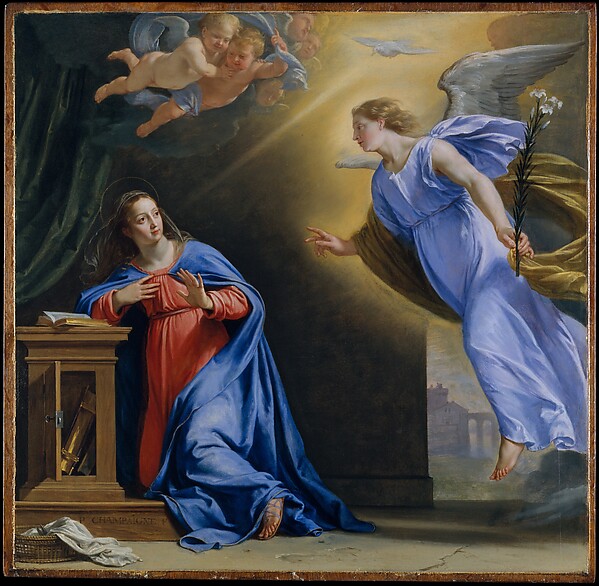
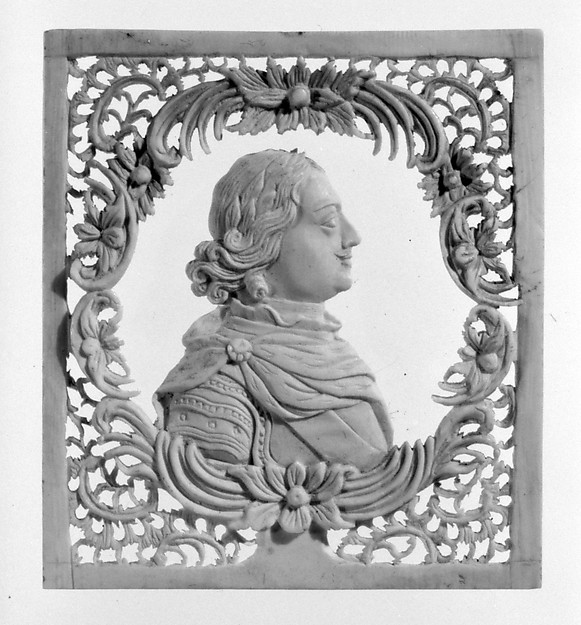
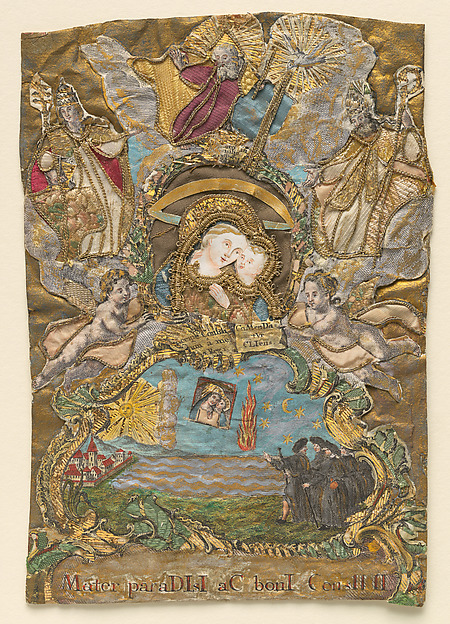
Overview
The Reformation era ended with the Peace of Westphalia in 1648. This era runs from that peace to the French Revolution in 1789. In those years the churches of Europe lived with the division the Reformation had made. In the Catholic Church the Jansenists and the Jesuits quarrelled over grace and morals, and the Catholic courts drove out the Jesuits until the pope suppressed them. Lutheran Pietists, the Moravians and the Methodists sought a more personal faith, and revival came to New England. Philosophers from Hume to Kant asked what reason could know of God. Rulers, from Louis XIV and Peter the Great to Joseph II, used their power over the churches, and in 1789 the French Assembly took the church’s property.
The page is arranged by East and West, as before. Events are tagged East or West. The East appears in one event, Peter the Great’s Holy Synod.
When were the sources written?
| Writing | Usual date | Notes |
|---|---|---|
| Pascal, Provincial Letters | 1656 to 1657; M’Crie’s translation, 1851 | Written for one side of the dispute |
| Wesley, Journal | Kept from 1735 to 1790; Parker’s abridged edition | Wesley’s own account |
| Edwards, Works, with Dwight’s memoir | Sermon of 1741; edition of 1834 | Edwards’s own text; the memoir quotes witnesses |
| Hume, Dialogues concerning Natural Religion | 1779 | Only the title page and the editor’s note were read |
| Schaff, Creeds of Christendom, vol. 1 | Sixth edition | A Protestant history of the confessions, used for events and dates |
| The Catholic Encyclopedia | The 1913 edition, on Wikisource | A Catholic reference work, used for events and dates |
Key debates
Pascal, the Jansenists and the Jesuits
The two main sources read here take opposite sides. Schaff calls Jansenism an earnest attempt at a conservative reform by reviving Augustine’s teaching on sin and grace, and the destruction of Port-Royal “barbarous tyranny”. The Catholic Encyclopedia says Pascal did not seriously alter his quotations from the casuists but arranged them somewhat disingenuously, and that he unjustly blamed the Society of Jesus alone; it also calls the Provincial Letters the first prose masterpiece of the French language. The page gives both views.
Why were the Jesuits suppressed?
The Catholic Encyclopedia puts the suppression down to the Bourbon courts of France, Spain, Naples and Parma and to Pombal in Portugal, moved, it says, by the spirit of the times: “French irreligious philosophism”, Jansenism, Gallicanism and Erastianism. It says the Spanish ambassador Moniño was responsible for the substance of the brief, and the pope gave it little more than its form. The page does not have a source with another view, and so gives this one with its name.
Reason and revelation
Kant’s critique of the proofs of God, the Catholic Encyclopedia says, did not deny God’s existence. Schaff writes that the Methodist revival checked the “skepticism and infidelity which had begun to set in with deism”, and that the destruction of Port-Royal “bred a generation of skeptics and infidels” in France. Hume’s own arguments are not given here, because only the title page of his Dialogues was read.
Did the state take over the church?
The Catholic Encyclopedia calls Peter’s Synod a copy of the consistories of the German Protestant states, set up “to bring the Church into absolute dependence on the State”. In France it says the Assembly of 1789 wanted the Catholic Church to be “subject to the State and really organized by the State”. Joseph II, by contrast, appears in Schaff for the toleration he granted. The sources read here do not say whether this was something new or a continuation of earlier royal control.
Worship and community life
Pietist and Methodist meetings
Spener’s collegia pietatis met in his house at Frankfurt from 1670 for devout reading and mutual edification. Schaff names the Methodists’ own institutions: itinerant preaching, class-meetings, band-meetings, love-feasts and conferences. The Moravians of Herrnhut, he says, gave the first Methodists their cheerful trust in God.
Devotion to Mary
Devotion to the image of Our Lady of Good Counsel at Genazzano spread in this period: the Catholic Encyclopedia says Innocent XI had the picture crowned in 1682, and Benedict XIII granted an office and Mass for its feast in 1727. The German devotional picture above names that image.
Glossary
| Term | Meaning on this page |
|---|---|
| Casuistry | Reasoning about how moral rules apply to particular cases |
| Erastian | Placing the church under the state’s control |
| Jansenism | A movement, chiefly in the French church, that taught Augustine’s strict view of grace |
| Pietism | A movement in German Lutheranism that stressed personal devotion and small meetings |
| Procurator | The lay official at the head of the Russian Holy Synod |
Further reading
Modern scholarship is cited here, not copied. Titles and years were checked against the Open Library catalogue in November 2026. Nothing on the page rests on these books.
- Owen Chadwick, The Popes and European Revolution (1981). The papacy in the eighteenth century.
- W. R. Ward, The Protestant Evangelical Awakening (1992). Pietism, the Moravians and the revivals.
- Jonathan I. Israel, Radical Enlightenment (2001). The critique of religion.
- Diarmaid MacCulloch, A History of Christianity: The First Three Thousand Years (2009). A wider survey.
Europe in 1789
The places named in the account of the Jesuit suppression, the state churches and the Revolution. No borders are drawn.
Europe in 1789
Places named in the account of the Jesuit suppression, Kant's Critique and the Revolution: Lisbon, Versailles and Paris, Rome, and Königsberg. No borders are drawn.
Key events
West: Jansen's Augustinus
Before this era began, friends of Cornelius Jansen, bishop of Ypres, published his Augustinus in 1640, two years after his death. It set out Augustine's teaching on grace, and ended by comparing the error of the Semipelagians with that of the Molinists, the Catholic Encyclopedia says; Schaff describes Jansenism as set against the teaching and practice of the Jesuits. Schaff says Jansen had read Augustine's works against Pelagius thirty times.
West: The Peace of Westphalia
The peace that ended the Thirty Years' War (see the Reformation era) closes that era and opens this one. Schaff says it was only then that the Reformed Church, as distinct from the Lutheran, was formally recognized in Germany.
West: Five propositions condemned
Innocent X's bull Cum occasione condemned five propositions said to come from the Augustinus. The Jansenists accepted the condemnation but denied that Jansen had taught the propositions in that sense, a question of fact, they said, on which the pope could be mistaken.
West: Pascal's Provincial Letters
The first letter is dated 23 January 1656 and the eighteenth 24 March 1657. The early letters defend the Jansenists on grace; from the fifth, Pascal mocks 'the morals taught by those good fathers the Jesuits', and from the eleventh he addresses the Jesuits directly.
West: Spener and the beginning of Pietism
At Frankfurt Spener began meetings in his house for devout reading in 1670, and in 1675 published Pia Desideria. The Catholic Encyclopedia dates the movement's appearance in the German Lutheran Church to about 1670.
West: The Revocation of the Edict of Nantes
On 22 October 1685 Louis XIV revoked the edict that had tolerated French Protestants since 1598. Schaff says it deprived France of a million of her best citizens and made the remaining Protestants a forbidden sect; about twenty thousand exiled Huguenots settled in Brandenburg.
West: Port-Royal destroyed, and the bull Unigenitus
The pope abolished the Jansenist convent of Port-Royal in 1709, and Louis XIV had its buildings destroyed in 1710. In September 1713 Clement XI's bull Unigenitus condemned 101 sentences from Pasquier Quesnel's moral reflections on the New Testament. Cardinal de Noailles, archbishop of Paris, and many French clergy appealed against it to a future council, but it was confirmed by later popes and accepted by the French clergy in 1730.
East: Peter the Great and the Holy Synod
After the death of the patriarch Adrian in 1700 Peter allowed no successor. His decree of 25 January 1721 abolished the patriarchate of Moscow and set up the Most Holy Synod in its place. In 1723 the patriarch of Constantinople recognized the Synod as a brother in Christ. Schaff says Peter made St Petersburg, which he founded in 1703, the political and ecclesiastical capital of his empire.
West: Herrnhut and the Moravians
Exiles from Moravia, descendants of the Bohemian Brethren, settled on Count Zinzendorf's estate at Berthelsdorf in Saxony, at a place they called Herrnhut. Schaff dates the Moravian Brotherhood from 1722; its first bishop was consecrated in 1735.
West: John Wesley at Aldersgate
On the evening of 24 May 1738, at a society in Aldersgate Street in London, someone read Luther's preface to the Epistle to the Romans. 'About a quarter before nine,' Wesley wrote, 'I felt my heart strangely warmed.'
West: Sinners in the Hands of an Angry God
Edwards preached this sermon at Enfield on 8 July 1741, 'at a time of great awakenings', the note in his works says. A witness quoted in the memoir says the congregation came in careless and was 'deeply impressed' before the sermon ended.
West: The Jesuits driven from Portugal, France and Spain
In Portugal the minister later known as Pombal had the Jesuits' faculties withdrawn throughout the patriarchate of Lisbon, and in 1759 the Society was suppressed there. Louis XV signed an edict dissolving it in France in November 1764. In Spain orders were opened on the night of 1 to 2 April 1767, and the Jesuits of Spain were deported, at last to Corsica; Naples and Parma followed.
West: The Jesuits suppressed
Clement XIV's brief Dominus ac Redemptor, signed on 8 June and dated 21 July 1773, dissolved the Society. Frederick II of Prussia and Catherine II of Russia took the Jesuits under their protection, and Pius VII restored the order by a bull of 7 August 1814.
West: Kant's Critique of Pure Reason
Kant argued that the proofs of God's existence from speculative reason are unsound, while not denying God's existence.
West: Joseph II's Edict of Toleration
On 29 October 1781 the emperor gave Lutherans and Reformed liberty of conscience and public worship. Schaff says Protestantism in Bohemia then began to 'raise its feeble head' again.
West: Toleration in France
Louis XVI issued an edict of universal toleration. Schaff sees it as a result of the spread of unbelief that followed the persecution of the French Protestants.
West: The Revolution and the church
The Estates-General met on 5 May 1789, and in June the clergy's majority joined the Third Estate in the National Assembly. On the night of 4 August the Assembly abolished privileges, and the tithes were then abolished without compensation. Its Declaration of the Rights of Man said only of religion that no one should be disturbed for his opinions, even religious ones, if they did not disturb public order. In October a crowd from Paris brought the king from Versailles, and the Assembly then sat in Paris, where on 2 November 1789 it placed the church's property at the disposal of the nation.
West: The Civil Constitution of the Clergy
Passed on 12 July 1790, after this era ends. It had bishops and priests elected, fixed their salaries, and required them to swear an oath to the constitution, without confirmation from the pope.
Key people
Blaise Pascal
Born at Clermont-Ferrand, he was won over to Jansenism in 1646. His Provincial Letters, eighteen dated letters from January 1656 to March 1657 and a nineteenth left unfinished, defended Antoine Arnauld and the Jansenist teaching on grace, then attacked the moral teaching of the Jesuit casuists. He died in Paris in 1662.
Philipp Jakob Spener
Pastor at Frankfurt from 1666, where in 1670 he began the collegia pietatis, meetings in his house for devout reading, from which the Pietists took their name. His Pia Desideria of 1675 proposed six reforms, among them such meetings for Bible reading and a fuller use of the priesthood of all believers. He became court preacher at Dresden in 1686 and moved to Berlin in 1691.
August Hermann Francke
Driven from Leipzig with the other Pietist teachers, he went to Halle as professor and pastor in January 1692, and Halle became the centre of Pietism in Lutheran Germany. He founded an orphan house in 1695, around which a Bible house was set up in 1710.
John Wesley
One of the 'Holy Club' at Oxford whose methodical devotion earned them the name 'Methodists'. Moravians he met on his voyage to Georgia led him to the experience of 24 May 1738, when his heart was 'strangely warmed'. Schaff says he aimed to revive piety within the Church of England and never left it, and quotes the estimate that he travelled a quarter of a million miles and preached more than forty thousand sermons.
Jonathan Edwards
Born at Windsor on the Connecticut on 5 October 1703 and ordained at Northampton in 1727. He preached Sinners in the Hands of an Angry God at Enfield on 8 July 1741, a time of great awakenings, the note to the sermon says. He died at Princeton on 22 March 1758, after inoculation against smallpox.
David Hume
His Dialogues concerning Natural Religion were published in London in 1779, after his death. The Catholic Encyclopedia says his analysis of causation woke Kant from his 'dogmatic slumber'.
Immanuel Kant
Professor of philosophy at Königsberg from 1770 to 1797. In the Critique of Pure Reason of 1781 he argued that speculative reason cannot prove the existence of God or the immortality of the soul, though, the Catholic Encyclopedia notes, he denied neither. His Religion within the Limits of Mere Reason followed in 1793.
Clement XIV
Elected on 18 May 1769 in a conclave pressed by France and Spain to choose a pope who would suppress the Jesuits. He signed the brief Dominus ac Redemptor on 8 June 1773, dated 21 July. He died in Rome on 22 September 1774.
Joseph II
By his Edict of Toleration of 29 October 1781 he gave the followers of the Augsburg and Helvetic Confessions, that is Lutherans and Reformed, liberty of conscience and public worship. His brother and successor Leopold confirmed it in 1791.
Sources for this era
- The Creeds of Christendom, volume 1: The History of Creeds, Philip Schaff (sixth edition; CCEL)
- The Catholic Encyclopedia (1913), Articles on Jansenius and Jansenism, Blaise Pascal, Pietism, the Holy Synod, Pope Clement XIV, the Society of Jesus, the Suppression of the Jesuits (1750-1773), the Philosophy of Kant, the French Revolution and the Feast of Our Lady of Good Counsel (Wikisource)
- The Provincial Letters, Blaise Pascal; translated by Thomas M'Crie (Edinburgh, 1851; CCEL)
- The Journal of John Wesley, John Wesley; edited by Percy Livingstone Parker (CCEL)
- The Works of Jonathan Edwards, volumes 1 and 2, Jonathan Edwards; with a memoir by Sereno E. Dwight, revised by Edward Hickman (1834; CCEL)
- Dialogues concerning Natural Religion, David Hume; second edition, London, 1779 (Wikisource)
- Three works in the Metropolitan Museum of Art, Open Access collection records (objects 438724, 205473 and 785981)
- Modern studies of the period, Owen Chadwick; Jonathan Israel; W. R. Ward; Diarmaid MacCulloch